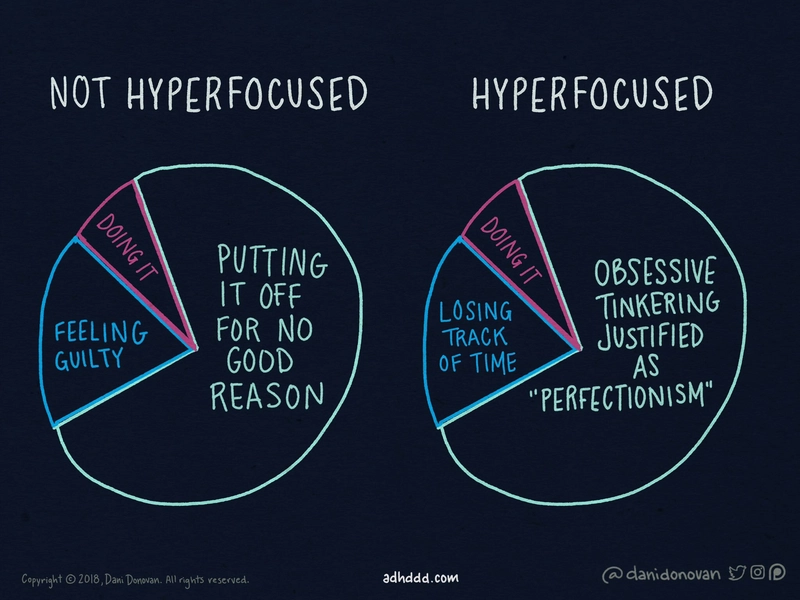
You sit down to “just check one video” about ancient Rome… and suddenly it’s 3 a.m., you’ve watched 47 documentaries, ordered three books on Amazon, and completely forgotten to eat, reply to texts, or walk the dog. Sound familiar?
That all-consuming tunnel of focus is what Finns call hyperfiksaatio — the Finnish word for what English speakers know as hyperfixation. In 2025 America, with 15.5 million adults and 7 million kids diagnosed with ADHD, this phenomenon isn’t rare — it’s a daily reality for millions.
This isn’t just another generic “coping tips” article. We’re filling every gap the basic guides ignore: clear terminology distinctions backed by 2024–2025 research, the latest U.S. CDC numbers, how TikTok and Instagram algorithms are literally engineered to hijack your brain, real American neurodivergent stories, and — most importantly — how to turn hyperfiksaatio from a liability into your biggest superpower. Let’s dive in.
Hyperfiksaatio vs. Hyperfocus vs. Special Interests: Finally, the Real Difference (2025 Clarity)
Most blogs treat these terms as synonyms. They’re not — and understanding the nuance changes everything.
Hyperfiksaatio (Hyperfixation)
- Long-term (days to months)
- Emotionally charged obsession with a topic, person, or hobby (e.g., K-pop idols, sourdough baking, true-crime podcasts)
- Feels compulsive and identity-tied
- Hard to disengage even when you know you should
Hyperfocus
- Short-term (minutes to hours)
- Intense flow-state concentration on a task (writing code, gaming, coloring)
- Can happen on boring work if the stakes feel right
- Often ends abruptly when the reward wears off
Special Interests (common in autism)
- Joy-filled, regulating, and often lifelong
- Usually creative or knowledge-building rather than draining
A September 2024 Psychology Today analysis and 2025 clinical reviews confirm: people with ADHD experience hyperfixation more than neurotypicals because our brains crave dopamine hits that everyday life rarely provides. One recent study even mapped it to atypical connectivity between the default mode network and reward centers.
The Neuroscience: Why Your Brain Does This (Dopamine 2025 Update)
ADHD brains don’t have a simple “dopamine deficiency.” 2024–2025 research (including receptor-ratio studies from NIH and University of Maryland) shows it’s more nuanced:
- Lower baseline dopamine signaling in the prefrontal cortex makes boring tasks feel painful.
- Highly stimulating interests trigger a massive dopamine surge — the same reward pathway that lights up for cocaine or winning the lottery.
- Result? Your brain locks onto the hyperfixation because it finally feels good.
How Common Is Hyperfiksaatio in the USA Right Now? (Latest CDC 2024–2025 Data)
- Children: 11.4% of U.S. kids ages 3–17 (≈7 million) have ever received an ADHD diagnosis — up 1 million since 2016 (CDC, May 2024).
- Adults: 6.0% of American adults (15.5 million) currently have an ADHD diagnosis; roughly half were diagnosed as adults (CDC Rapid Surveys, Oct 2024).
- Boys are diagnosed at nearly double the rate of girls, but girls and women are catching up fast in adulthood as awareness grows.
Bottom line: if you’re reading this in 2025, you’re far from alone — and the numbers are still climbing.
The Signs You’re in Hyperfiksaatio Mode
- Time blindness: “I’ll just watch one more episode” → sunrise.
- Neglected basics: forgetting meals, hygiene, bills, or relationships.
- Emotional rollercoaster: euphoria while engaged → crash, guilt, or emptiness when the fixation fades.
- Irritability when interrupted.
- Physical neglect: ignoring bathroom needs, sleep, or movement until your body forces a break.
The Superpower Side: How Top Performers Harness Hyperfiksaatio
Here’s what the deficit-focused blogs never tell you: hyperfiksaatio built empires.
- Programmers who hyperfixate on one language for 3 months → become senior devs in record time.
- Artists who disappear into a series for weeks → launch viral collections.
- Researchers who rabbit-hole on niche topics → publish groundbreaking papers.
The “Hyperfiksaatio-to-Asset Blueprint” (2025 edition)
- Interest Stacking — Attach boring tasks to your current fixation (e.g., listen to true-crime podcasts while doing dishes).
- Timed Sprints — Use a 90-minute Pomodoro with a visible countdown app (Focus Booster or Tide).
- Body Doubling — Work alongside someone on Focusmate or in a Discord study room.
- Reward Layering — After 2 focused hours, allow 30 guilt-free minutes on your fixation.
- Transition Rituals — Use a specific playlist or 5-minute walk to exit the hyperfocus state.
Digital-Age Trap: How Algorithms Weaponize Hyperfiksaatio
2024 Stanford analysis of 30 million posts proved negative, high-arousal content spreads fastest. TikTok, Instagram Reels, and YouTube Shorts are literally designed with variable rewards — the same mechanism that makes slot machines addictive.
Doomscrolling + Hyperfiksaatio = Dangerous Combo A 2025 study linked prolonged doomscrolling to prolonged beta/gamma brain waves (the “can’t stop scrolling” signature) and delayed alpha recovery — exactly the neural pattern seen in hyperfixation loops.
Digital Hygiene Protocols for Hyperfixators
- Browser extensions: One Sec, Freedom, or Cold Turkey.
- Phone: Grayscale mode + app limits set to 20 minutes.
- Weekly “Interest Detox Sunday” — delete apps for 24 hours.
- Algorithm reset: Search neutral topics for 10 minutes to retrain your feed.
Real Voices: Americans Living with Hyperfiksaatio
Sarah, 28, Austin, TX (software engineer) “I hyperfixated on mechanical keyboards for 4 months. Spent $1,200 and learned to solder. Now I run a side hustle selling custom keycaps and it pays my rent. The same trait that made me fail college algebra made me $40k last year.”
Marcus, 34, Chicago, IL (father of two) “My 9-year-old hyperfixates on Pokémon cards. Instead of fighting it, we turned it into math lessons (probability, budgeting). His teacher says his focus during card-strategy sessions is better than any neurotypical kid’s.”
Elena, 41, Seattle, WA (therapist with ADHD) “I used to shame my true-crime hyperfixations. Now I channel them into writing a podcast that hit 100k downloads. The guilt is gone when you stop calling it a flaw.”
Age- & Role-Specific Tools (Because One-Size-Fits-All Doesn’t Work)
For Parents of Hyperfixating Kids
- Visual timers + “interest menus” on the fridge.
- School 504/IEP accommodations: extended project deadlines when hyperfixated productively.
For Teens
- Gamify schoolwork with Habitica or Notion templates themed around their current fixation.
For Working Adults
- “Hyperfocus Hours” blocked on calendar (tell your boss it’s deep-work time).
- Tools: Notion ADHD dashboards, Focus@Will music, or the new 2025 app “FixateFlow.”
When to Get Professional Help + U.S. Treatment Options (2025)
If hyperfiksaatio consistently destroys relationships, jobs, or health, seek help.
- CBT for ADHD — gold standard, now widely available via telehealth (BetterHelp, Talkspace, or local CHADD providers).
- Medication — Stimulants still first-line; 2024–2025 shortages improved but generic options expanded.
- Coaching — ADHD coaches specializing in “interest harnessing.”
- Support groups: CHADD, ADDitude webinars, or local Meetups.
Your 30-Day Hyperfiksaatio Action Blueprint
Week 1: Track 3 hyperfixation episodes (what triggered, how long, life impact). Week 2: Pick ONE boring task and stack it with your current interest. Week 3: Implement one digital boundary + one transition ritual. Week 4: Celebrate a “harnessed win” — turn 4+ hours of fixation into a tangible output (blog post, cleaned garage, learned skill).
Final Thought
Hyperfiksaatio isn’t a bug — it’s a feature of a brain wired for passion in a world that rewards distraction. In 2025 America, the people who win aren’t the ones without hyperfixations; they’re the ones who learned to steer them.
You now have the clearest terminology, freshest U.S. data, digital defense playbook, and superpower framework that no other article on “hyperfiksaatio” provides.
Save this page. Share it with your partner or boss. And next time you fall down a rabbit hole, smile — because now you know exactly how to climb back out… or build an empire at the bottom.
What’s your current hyperfiksaatio? Drop it in the comments — let’s normalize it and harness it together.
Sources: CDC ADHD Data Briefs 2024–2025, Psychology Today Sep 2024, Stanford PLoS ONE 2024, NIH dopamine receptor studies 2025, CHADD clinical reviews.
You’ve got this. Your brain is not broken — it’s just built different. And in 2025, that’s your unfair advantage. 🚀
